How To Fix Water Hammer In Pipes & Stop Banging
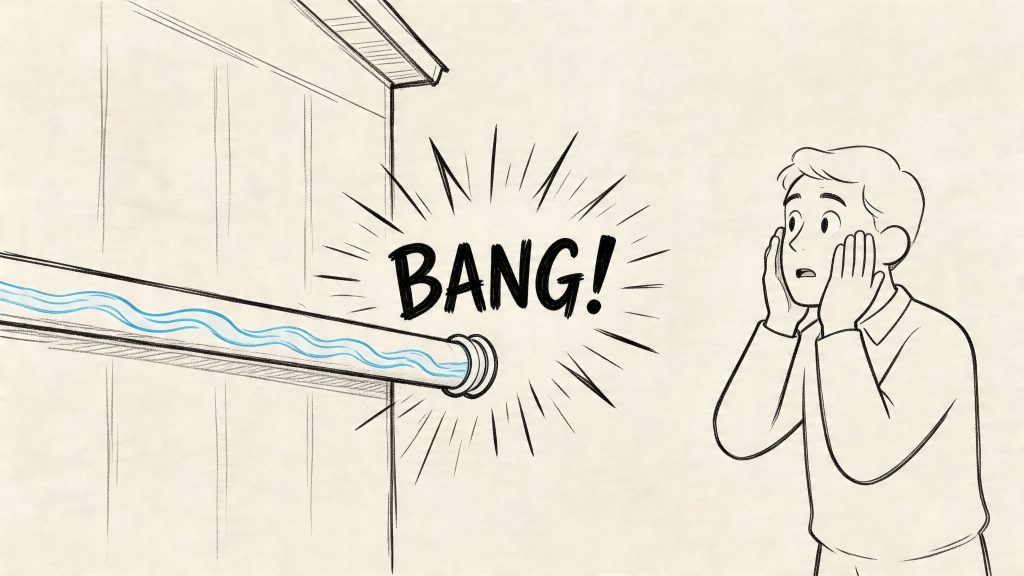
You shut off the washing machine, the dishwasher finishes a cycle, or someone snaps the shower valve closed. Then you hear it. One hard bang in the wall, or a rapid rattle that sounds like a pipe is trying to jump loose.
That noise usually isn't random. It's your plumbing telling you it's taking a hit.
In North Metro Atlanta, I see this in older homes, newer homes, homes with pressure problems, and homes where hard water has been steadily causing wear on valves and fixtures for years. Homeowners in Acworth, Woodstock, Roswell, Marietta, Alpharetta, Canton, Cumming, and Johns Creek often think the sound is harmless because it only lasts a second. That's the mistake. A short noise can still mean repeated stress on pipe joints, valves, supply lines, and appliances.
If you're searching for how to fix water hammer in pipes, the right answer depends on what is causing it. Sometimes it's as simple as securing a loose pipe. Sometimes it points to pressure trouble, a failed regulator, or a fixture valve that needs proper protection. And sometimes it's the early warning before you end up needing leak repair, burst pipe repair, main water line repair, or even a late-night call to an emergency plumber.
That Alarming Banging Sound in Your Walls Explained
The sound usually shows up when water stops too fast.
A toilet can do it. So can a dishwasher, washing machine, ice maker, or a shower valve. Fast-closing valves are common troublemakers because they stop moving water suddenly. The force has to go somewhere, so it slams back through the piping.
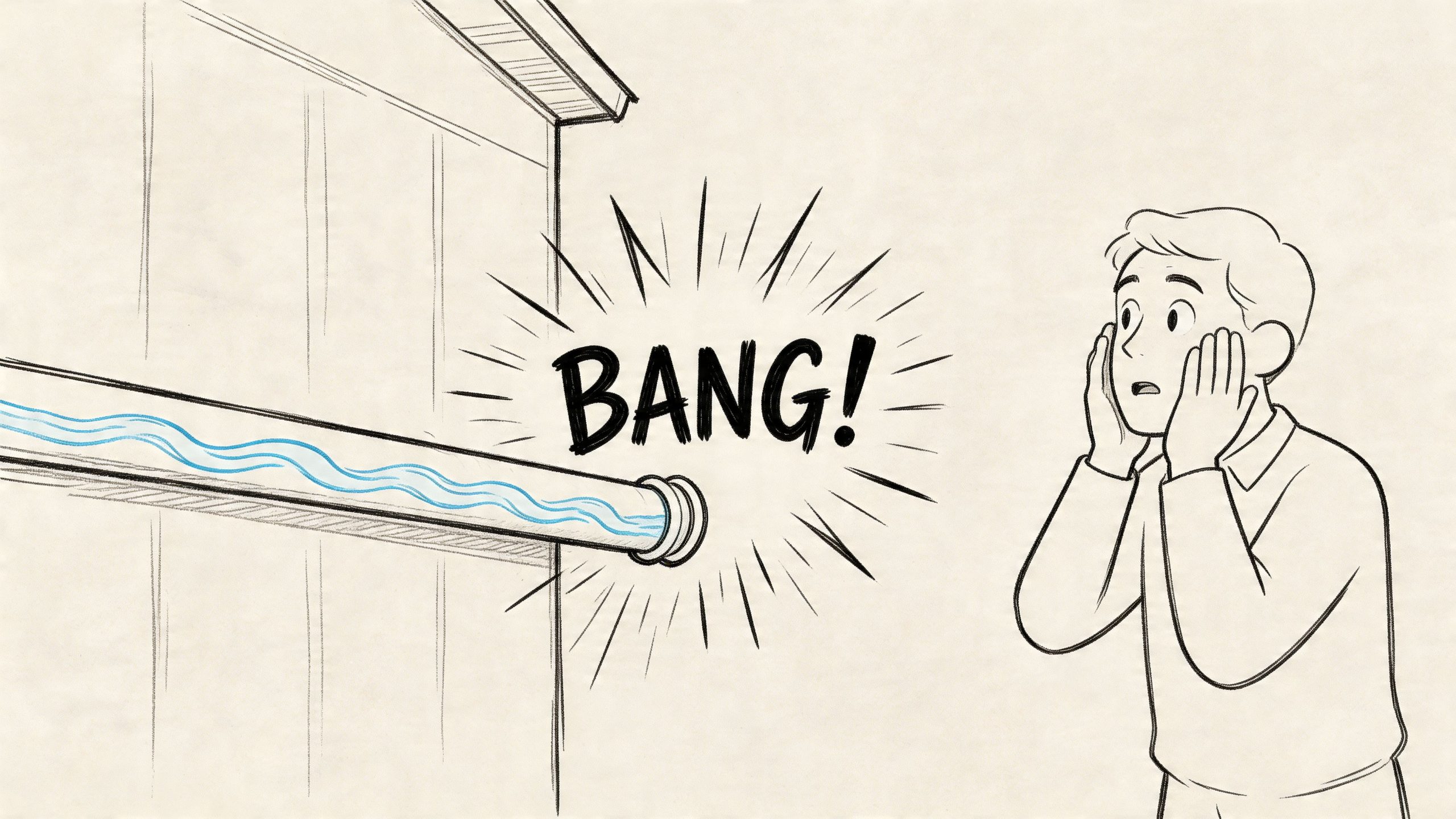
What water hammer actually is
Water hammer is a hydraulic shockwave inside the pipe.
Imagine traffic hitting a wall. Water is moving with momentum, the valve closes, and that moving column of water gets checked instantly. The pipe, fittings, and valves absorb the jolt. That's why the sound can be sharp and violent even when no leak is visible yet.
The danger isn't just the noise. Repeated hammering can loosen fittings, stress shutoff valves, and wear out weak points in the system.
A loud bang after a valve closes is often the first warning. The leak usually comes later.
Why homeowners shouldn't ignore it
I've seen people live with pipe banging for months because the house still had water and nothing was dripping. Then a small leak shows up under a sink, behind a washing machine, or in a wall cavity. In worse cases, pressure stress adds to an already weak section of pipe and turns a nuisance into a real repair.
That matters if you're already dealing with other plumbing symptoms like these:
- Noisy appliances: Washing machines and dishwashers often trigger the sound first.
- Intermittent low pressure: Pressure trouble doesn't always stay consistent.
- Small mystery leaks: Water hammer can expose weak joints.
- Older plumbing systems: Aging supports, old valves, and legacy air chambers fail more often.
What it sounds like compared to other pipe noises
Not every pipe noise is water hammer.
A single hard thud right after a valve closes points one way. A chattering or ongoing rattle may point to a loose pipe, bad support, or a valve issue. If the sound happens together with sewage smell, slow drains, a clogged toilet won't flush, or water in the yard, you're likely dealing with more than one plumbing issue at once.
For homeowners in Roswell, Alpharetta, and the rest of North Metro Atlanta, the big takeaway is simple. Banging pipes are not normal. They are a symptom. Treat them that way.
How to Diagnose the Cause of Your Water Hammer
Don't start buying parts until you know what's causing the bang.
The same noise can come from different problems. A pro doesn't guess. A pro narrows it down fixture by fixture, line by line.
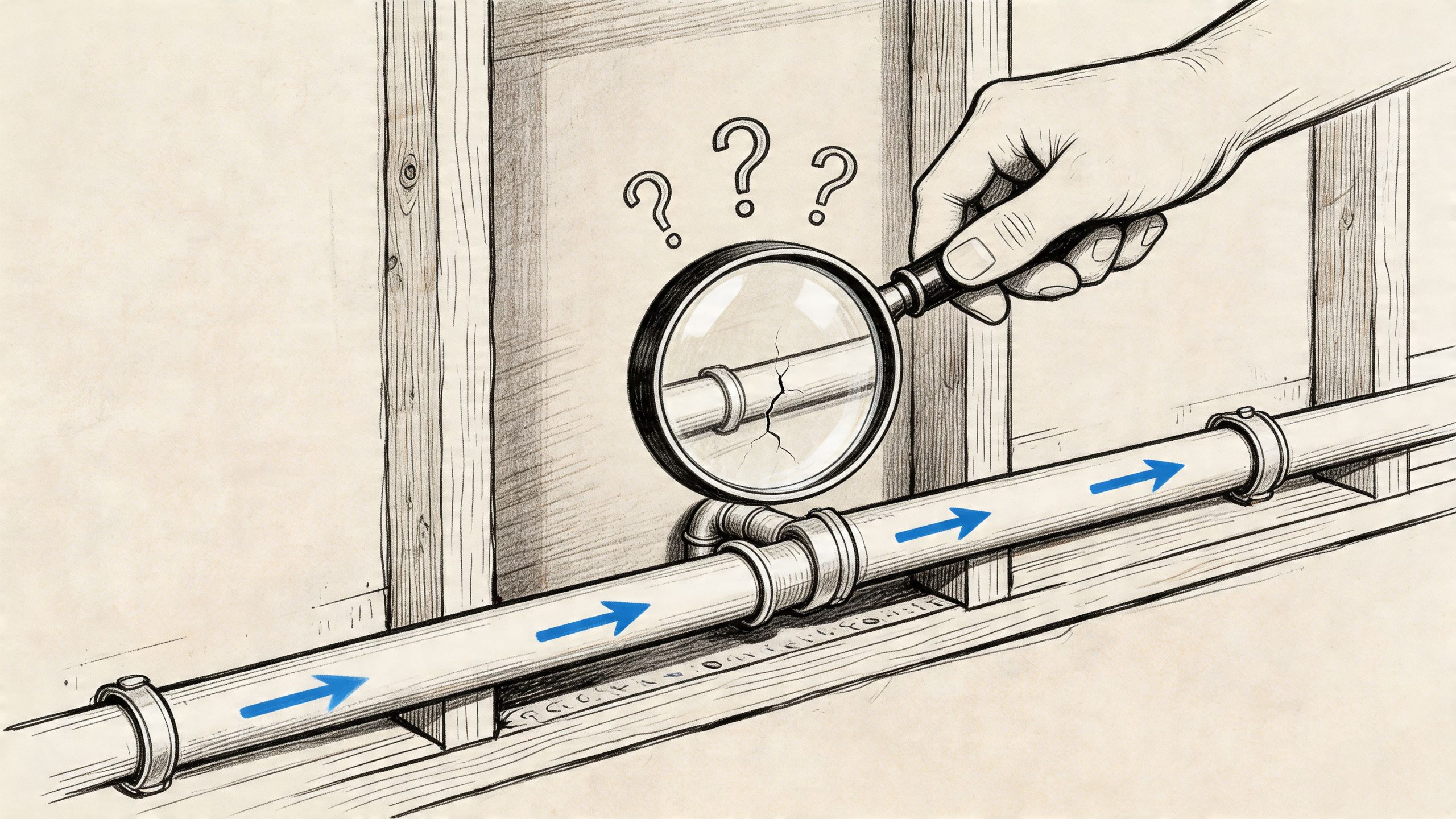
Start with when the noise happens
Use the house normally for a few minutes and pay attention.
Does it happen when the washing machine shuts off? Only when someone uses the upstairs shower? Only at night when the ice maker cycles? If the noise consistently matches one fixture or appliance, start there.
This is especially common at laundry hookups with fast-closing valves. If your problem centers on that area, look at the washer box setup and shutoffs before you do anything else. This guide to a washing machine washer box helps you understand the connection points that often trigger hammer.
Check the pressure first
High water pressure is a primary cause of water hammer, and pressures near 100 psi significantly raise the risk. Normal operating pressure should be kept between 30 to 55 psi, and the shockwave created by fast-closing valves can exceed normal pressure by 5 to 10 times, according to Anchor Pumps' explanation of what causes water hammer.
You don't need a truck full of tools to check this. A basic pressure gauge that threads onto a hose bibb or laundry connection will do.
Use this quick pressure check
- Thread the gauge on to a hose bibb or laundry faucet.
- Make sure no water is running inside the house.
- Open the valve fully and read the gauge.
- Check the number again later, especially if municipal pressure changes through the day.
If the pressure is above the normal range, don't ignore it. High pressure doesn't just make hammer worse. It stresses water heaters, supply lines, shutoff valves, ice maker lines, and old compression fittings.
Listen to the type of noise
The sound tells you a lot.
A single sharp bang right after shutoff usually points to hydraulic shock. A rattle or chatter often means the pipe is moving because it isn't secured well. Sometimes both are happening. The shock starts the event, and the loose pipe makes it louder.
Practical rule: If you can put your hand on an exposed pipe and feel it jump when a valve closes, you likely have a support problem along with the hammer.
Inspect exposed piping
If you have a basement, crawlspace, garage wall, utility room, or unfinished area, look at the accessible pipe runs.
You're checking for:
- Loose pipe straps: Missing or broken supports let the pipe move.
- Pipe marks on framing: Scuffs show where the pipe has been striking wood or metal.
- Old vertical capped stubs: These may be legacy air chambers.
- Leaks or corrosion: A hammer problem and a leak problem often travel together.
Legacy air chambers can stop working when they fill with water. Once they lose their air cushion, they stop cushioning anything.
Pay attention to related symptoms
Water hammer by itself is one issue. Water hammer with other symptoms is more serious.
Look for patterns like these:
| Symptom | What it may suggest |
|---|---|
| Bang plus dripping behind wall | A hidden leak may already be forming |
| Bang plus low hot water pressure | A valve, regulator, or heater-side issue may be involved |
| Bang at one appliance only | Localized fixture protection may solve it |
| Bang across the whole house | Pressure or system-wide control is more likely |
If you're seeing wet drywall, a stained ceiling, or active leaking, stop troubleshooting and move straight to repair planning. At that point, you're no longer just solving noise. You're preventing damage.
DIY Fixes You Can Tackle This Weekend
Saturday morning is a good time to deal with water hammer. Saturday night is not. If you start turning valves and loosening fittings without a plan, a banging-pipe repair can turn into a leak call fast.
Start with fixes that are low risk and easy to verify. In North Metro Atlanta homes, I also tell people to keep local water conditions in mind. Hard water in this area shortens the life of valves, regulators, appliance solenoids, and arrestors. A fix that should last can fail early when scale is already building inside the system.
Tighten up loose pipe support
Secure any accessible pipe that is slapping framing or shifting when a valve closes.
Loose support makes hammer louder and rougher on the piping. It also fools homeowners into chasing pressure problems first, when part of the noise is plain physical movement. If you can reach the pipe safely, this is one of the best weekend jobs to start with.
Focus on exposed runs near:
- Laundry boxes and washer hookups
- Dishwasher supply lines and nearby basement ceilings
- Garage walls, crawlspaces, and unfinished utility areas
- Long horizontal runs with visible sagging or rubbing
Use clamps or straps made for the pipe material. Copper, PEX, and CPVC should not be fastened the same way. Leave room for normal expansion. If you cinch a strap down too hard, you create a new problem.
A good result here is simple. The sharp bang drops to a dull thump, or the noise happens less often. That means pipe movement was part of the issue, even if it was not the only issue.
Recharge an old air chamber
Some older houses still have air chambers instead of modern arrestors. These are the short capped vertical stubs you may see near older fixture lines.
They only work while they hold air. Once they waterlog, the cushion is gone.
You can try recharging them by draining the system:
- Shut off the main water supply.
- Open faucets around the house.
- Flush toilets and drain as much water as possible.
- Wait until flow stops at the lowest open fixture.
- Close the fixtures.
- Restore water slowly.
This is an old-school reset. Sometimes it buys you time. Sometimes the noise comes back quickly.
If it does, stop treating the reset like a permanent repair. In older Acworth, Marietta, and Roswell homes, I often see those legacy chambers lose effectiveness because the bigger problem is worn valves, high pressure, mineral buildup, or a combination of all three.
Install screw-on water hammer arrestors
For a single noisy appliance, this is often the best DIY fix.
Modern arrestors absorb the shock from quick-closing valves, especially on washing machines and dishwashers. The easiest installations are at threaded shutoffs where you do not need to cut pipe. That keeps the job in weekend territory for a careful homeowner.
Oatey's water hammer arrestor guidance covers the basic process. Shut off the water, drain the line, choose the right arrestor for the fixture, install it correctly, and bring the water back on slowly.
A few mistakes show up over and over:
- Using the wrong size arrestor
- Installing it too far from the fast-closing valve
- Over-tightening threaded connections
- Ignoring a bad hose, failing shutoff, or worn appliance valve
If the arrestor goes in and the bang does not change, that tells you something. The fixture may not be the main cause. House pressure may be too high, or the pipe may still be free to jump behind the wall.
Comparing DIY Water Hammer Solutions
| Solution | Estimated Cost | Time Required | Effectiveness |
|---|---|---|---|
| Secure loose exposed pipes with proper straps | Varies by materials needed | Short weekend task | Good if pipe movement is a major part of the noise |
| Recharge old air chambers | Low-cost interim fix | Short to moderate | Temporary in many homes |
| Install screw-on water hammer arrestors | Varies by fixture and arrestor type | Moderate | Strong option for fixture-specific hammer |
| Adjust or replace a pressure regulator | Varies widely by system condition | Moderate to advanced | Effective when high pressure is the root cause |
Be careful with the pressure regulator
The pressure reducing valve near the main line causes trouble when it starts sticking, wearing out, or losing control. High pressure can create hammer across the house, not just at one fixture.
Some regulators can be adjusted. That does not make every regulator a good DIY candidate.
Old regulators in North Metro Atlanta often have scale inside them from hard water. That buildup can make the adjustment screw misleading. You turn it, nothing changes, then the valve shifts later and the pressure swings all over the house. I have seen homeowners go from pipe noise to leaking supply lines after forcing an old regulator that should have been replaced.
Check for these warning signs before touching it:
- Corrosion on the body or fittings
- Dripping or moisture around the valve
- No clear pressure response to adjustment
- Pressure that surges or drops around the house
If you do not have a pressure gauge and you are guessing, stop there. Many weekend projects fail at this point.
What works versus what usually wastes time
The best DIY fixes match the pattern of the problem.
Usually worth trying
- Securing exposed loose pipes
- Recharging a known older air chamber once
- Installing a properly sized arrestor at a washer or dishwasher connection
Usually a waste of time
- Repeating the full-house drain procedure every few weeks
- Swapping out random fixtures without confirming the cause
- Forcing an old regulator adjustment
- Ignoring scale buildup on valves and appliance connections
For long-term prevention, do not look at water hammer as only a noise problem. Around North Metro Atlanta, hard water keeps adding wear inside the system. That is one reason some homes keep having the same hammer issue after a basic repair. If scale is contributing to failing valves, sticking regulators, or shortened arrestor life, whole-house water treatment can help protect the plumbing. In some houses, a HALO filtration setup becomes part of the long game because it helps reduce mineral-related wear that keeps feeding the problem.
Weekend fixes can quiet the pipes. The lasting fix is the one that addresses why the shock started in the first place.
When to Call a 24 Hour Plumber in North Metro Atlanta
There's a line between a manageable repair and a job that needs pro tools, pro diagnosis, and code-correct work.
A lot of homeowners wait too long because the house still has water. That's not a good test. The better test is whether the system is stable and whether you're certain what failed.
Red flags that mean stop DIY work
Call a plumber if any of these show up:
- The banging got worse after you tried a fix
- You see water stains, wet drywall, or active dripping
- Pressure is unstable throughout the house
- The regulator is leaking, corroded, or unresponsive
- The sound is tied to the water heater, main line, or multiple fixtures
- You have a same-day issue with burst pipe repair, leak repair, or no water
This matters in homes all over Acworth, Woodstock, Canton, Roswell, Marietta, Cumming, and Johns Creek because municipal pressure, hard water, fixture wear, and mixed-age plumbing systems create combinations that aren't obvious from the outside.
What a pro actually changes
A real diagnosis usually includes checking pressure behavior, fixture location, support conditions, valve operation, and whether the system needs local protection or whole-house control.
According to Classic Plumbing's explanation of water hammer arrestors, modern water hammer arrestors are a proven mechanical fix that uses springs and air bladders, performs better than traditional air chambers that need periodic draining, handles surges that can reach 5 to 10 times above normal pressure, and is often code-required in new construction and retrofit work.
That matters because a professional isn't just quieting the noise. The goal is to protect the pipe, joints, valves, and connected equipment.
Emergency situations don't stay small
If the noise is tied to a leak behind a wall, a washing machine box failure, a failing shutoff, or a bad regulator on the main, waiting can turn a repair into drywall, flooring, cabinet, or ceiling work.
If you're at that point, use a true 24/7 emergency plumbing service rather than waiting for regular business hours and hoping the leak holds.
The moment pipe banging comes with visible water, you're not troubleshooting anymore. You're containing damage.
The jobs that usually need a licensed plumber
These are the calls that shouldn't be guesswork:
- PRV replacement: Main-line pressure devices affect the whole house.
- Hidden leak repair: Especially when noise is followed by stains or moisture.
- Inside-wall or crawlspace piping repairs: Access, support, and safe reconnection matter.
- Code-required arrestor installs in retrofits: Fixture type and placement matter.
- Related major plumbing work: Water heater replacement, sewer repair, sewer replacement, main water line repair, drain cleaning, or exterior leak repair happening at the same time.
A good plumber doesn't just silence the symptom. He figures out why the symptom started.
Long-Term Prevention and Protecting Your Plumbing System
Once the banging stops, keep it from coming back.
That means thinking beyond the one noisy valve. Water hammer is often part of a broader plumbing health issue that includes pressure management, valve condition, pipe support, and water quality.
The habits that help
A few low-tech habits go a long way:
- Close manual valves gently: Fast shutoff creates more stress.
- Look at exposed piping once in a while: Catch loose straps before the line starts slamming.
- Pay attention to new noises: A quiet house that suddenly develops one sharp bang is telling you something changed.
- Don't ignore sediment problems: Fixtures and appliance valves don't last as long when debris is moving through the system.
These are especially useful for rental homes and investment properties, where small plumbing issues get missed until a tenant reports damage. Property owners who want a broader upkeep checklist may find this guide on smart maintenance for your rental property helpful because it puts routine prevention into practical terms.
Filtration can help, but it changes the system
This is the part many generic water hammer articles miss.
In hard-water areas around North Metro Atlanta, homeowners often add whole-home filtration to protect fixtures, improve water quality, and reduce mineral trouble. That's smart, but a filtration system also changes flow conditions and pressure behavior. If the install isn't balanced properly, the house can still hammer.
A more nuanced fix is using a pre-filter pressure regulator. JMJ Plumbing's HALO service experience found that 30% of installs need arrestors nearby, which prevented 80% recurrence, and the same source states that ASPE 2025 studies showed filtration systems can increase hammer risk by 25% in hard-water areas like Atlanta. Those details appear in Fluidmaster's water hammer discussion at this water hammer and filtration reference.
The practical point is simple. Filtration and hammer control need to work together.
Protect the system, not just the symptom
If your home has a filtration setup, pressure should be managed before the filter assembly becomes part of the problem. That's why it helps to understand your PRV and water pressure options as part of the long-term plan, not just when a bang starts in the wall.
A good prevention strategy often includes:
| Priority | Why it matters |
|---|---|
| Stable pressure control | Reduces stress on the whole plumbing system |
| Proper arrestor placement | Protects fast-closing valves where shock starts |
| Good pipe support | Prevents noise amplification and movement damage |
| Water quality management | Helps valves and fixtures last longer in hard-water conditions |
The long game is protecting everything connected to the plumbing. Water heater components, appliance valves, shutoffs, fixture cartridges, and even the lines feeding them all last longer when pressure and water quality are under control.
Frequently Asked Questions About Water Hammer
Can water hammer damage my water heater
Yes. I see it show up as wear on the piping, shutoffs, and valves serving the heater long before the tank itself gets blamed.
The water heater is often taking the hit, not causing the hit. In North Metro Atlanta homes with harder water, mineral scale already puts extra strain on valves and moving parts. Add repeated pressure shock and those parts wear out faster. If you hear banging and also notice popping at the tank, uneven hot water, or an older heater, have the whole setup checked together.
Is one loud bang less serious than constant rattling
A single bang usually points to a sharp pressure shock at one fast-closing valve. Constant rattling usually points to loose pipe, bad support, or pipe movement after the shock.
Both can damage the system over time.
The main question is where it happens and how often. If it only happens at one toilet, washer, or dishwasher, the repair may stay local. If you hear it in several parts of the house, pressure control or system layout may be part of the problem.
Is recharging an old air chamber worth trying
Sometimes, for an older house with basic air chambers, it can quiet the noise for a while.
I would treat it as a short-term test, not a long-term fix. Those chambers often lose their air cushion again, especially in areas like ours where hard water can foul valves and add stress across the system. If the noise comes back, skip the repeat DIY cycle and install the right arrestor in the right location. That usually saves money and wall damage in the long run.
How much does it cost to fix water hammer in the Atlanta area
The cause drives the price.
Tightening or strapping a loose pipe is one level of repair. Replacing a failed pressure reducing valve, opening a wall, correcting support, or repairing damage around a washer box is a different job entirely. Homes in Acworth, Woodstock, and the rest of North Metro Atlanta also tend to have age, rebuilds, additions, and hard-water wear working against them, so two houses with the same noise can need very different repairs. Any plumber giving a flat price without diagnosing it first is guessing.
What if I have both low water pressure and banging pipes
That needs a real diagnosis, because those symptoms do not always come from the same failure.
Low pressure can mean a bad valve, a failing regulator, mineral buildup, a partially closed shutoff, or a restriction somewhere in the line. Banging can happen at the same time, but fixing the noise alone does not solve the pressure problem. In Atlanta-area homes with scale buildup, I also look at water quality as part of the bigger picture. Long-term prevention may include pressure correction, fixture repair, and filtration planning so hard water is not shortening the life of cartridges, fill valves, and arrestors. A HALO filtration setup can be part of that strategy when the home's water conditions justify it.
Can I ignore it if it only happens at the washer
No.
The washer is one of the most common places for true water hammer because those valves close fast. Homeowners often replace hoses and stop there. That misses the core issue. The stress usually shows up next at the shutoff, hose bibb connection, washer box, or the pipe behind the wall. Catching it early is cheaper than opening drywall after a leak.
If you're hearing banging pipes in Acworth, Woodstock, Marietta, Roswell, Alpharetta, Canton, Cumming, Johns Creek, or anywhere in North Metro Atlanta, JMJ Plumbing can diagnose the cause, explain your options clearly, and handle everything from water hammer repairs to leak repair, drain cleaning, water heater replacement, sewer repair, sewer replacement, main water line repair, and 24/7 emergency plumbing.