How to Snake a Clogged Toilet: A Homeowner’s Guide
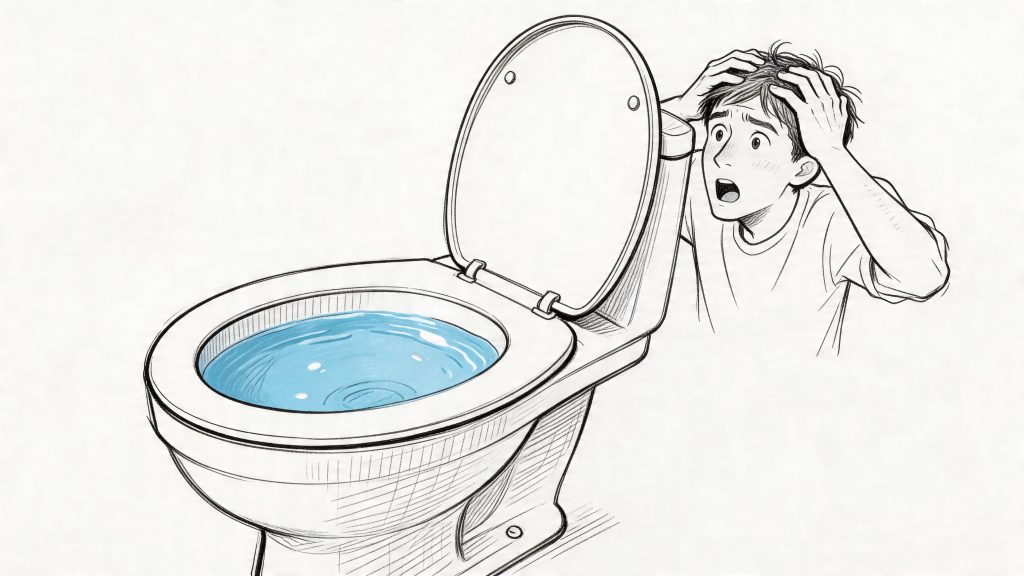
A toilet that won't flush has a way of stopping the whole house. You hit the handle, the water rises instead of dropping, and suddenly you're standing there deciding whether to grab a plunger, shut off the valve, or just close the bathroom door and pretend you didn't see it.
Around North Metro Atlanta, I’ve seen this play out in every kind of home, from newer builds in Johns Creek to older houses in Marietta and Woodstock. Sometimes it’s a simple bowl clog you can clear yourself. Sometimes that “clogged toilet won’t flush” call turns out to be a bigger drain cleaning issue, a sewer backup, or trouble farther down the line. Knowing the difference matters.
That Sinking Feeling A Clogged Toilet Won’t Flush
The first mistake most homeowners make is treating every toilet clog like the same problem. They aren't. One bathroom clog after somebody used too much toilet paper is one thing. A toilet that bubbles, rises, and makes the tub gurgle is something else.
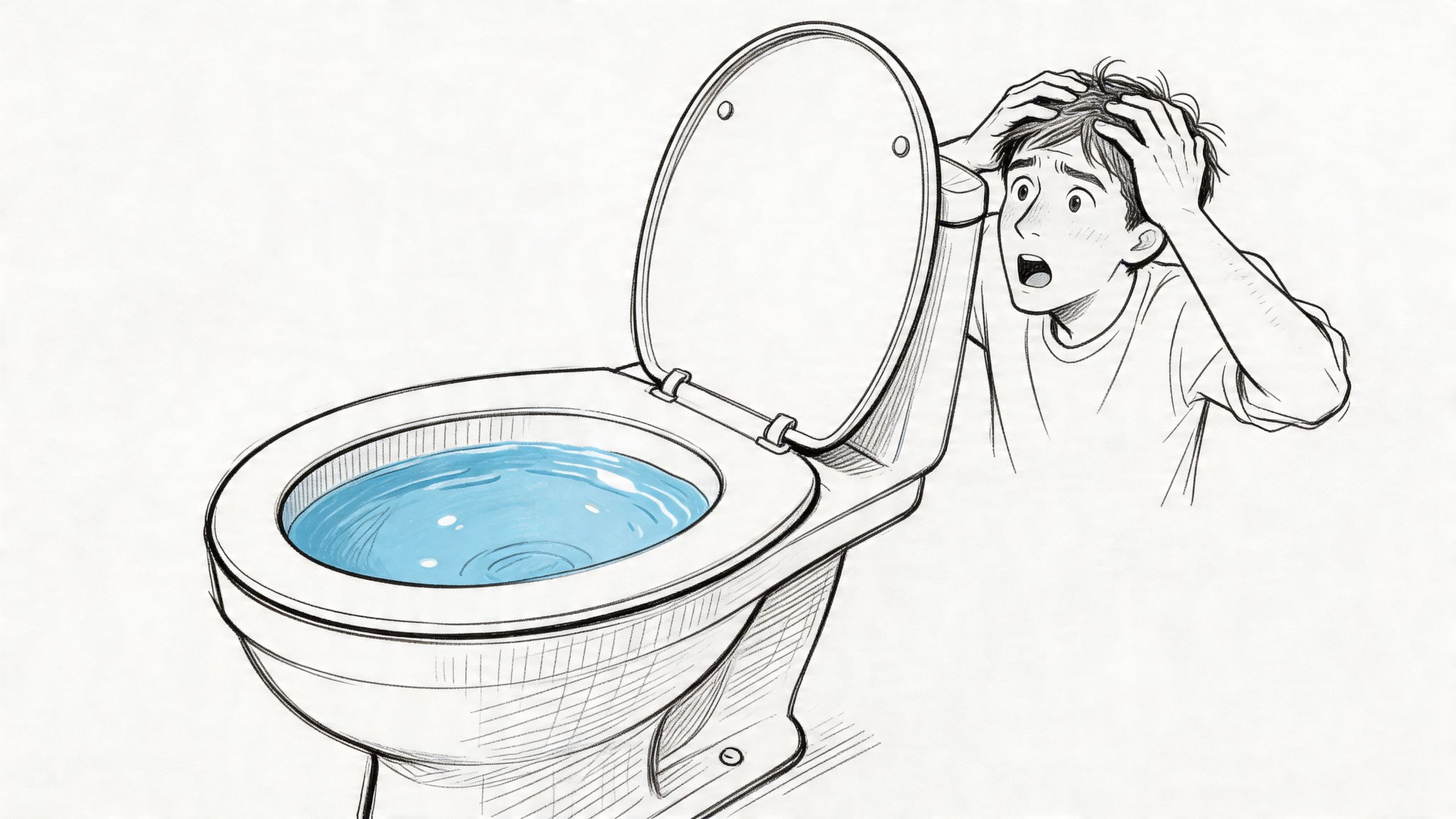
If the bowl is filling up right now, stop adding water. Take the tank lid off and close the flapper if needed. Then turn the shutoff valve behind the toilet clockwise so you don't turn a clogged toilet into water all over the floor.
What a simple clog looks like
A basic clog usually stays local to that one toilet. The sink beside it drains fine. The tub isn't backing up. You don't smell sewage outside. In that situation, learning how to snake a clogged toilet can save you time and a service call.
A lot of homeowners try to solve it with whatever cable they have in the garage. That's where trouble starts. Toilet traps are curved, porcelain scratches easily, and the wrong tool can make a manageable problem worse fast.
Practical rule: If only one toilet is acting up and the rest of the house is draining normally, a careful DIY attempt makes sense.
When it may be more than the toilet
In older parts of Acworth, Canton, and some stretches of Cobb and Cherokee County, I pay close attention when a homeowner says more than one fixture is acting strange. That often points away from the toilet and toward the sewer line.
Watch for these clues before you start snaking:
- Multiple drains are slow: The shower, sink, or another toilet is also sluggish.
- You hear gurgling nearby: Flushing the toilet makes the shower or tub talk back.
- There’s sewage odor: A bad smell in the bathroom or yard is a red flag.
- The problem keeps returning: You clear it, then it clogs again soon after.
If you want another homeowner-focused perspective on fixing a clogged toilet, that guide is useful for understanding the difference between a common clog and a mess that needs more caution.
A toilet snake is a solid tool. Good judgment is the better one.
Before You Start What You Need for the Job
Gather the tools, control the water, and clear yourself some room. That short setup does more to prevent a nasty bathroom cleanup than force ever will.
The one tool that matters most
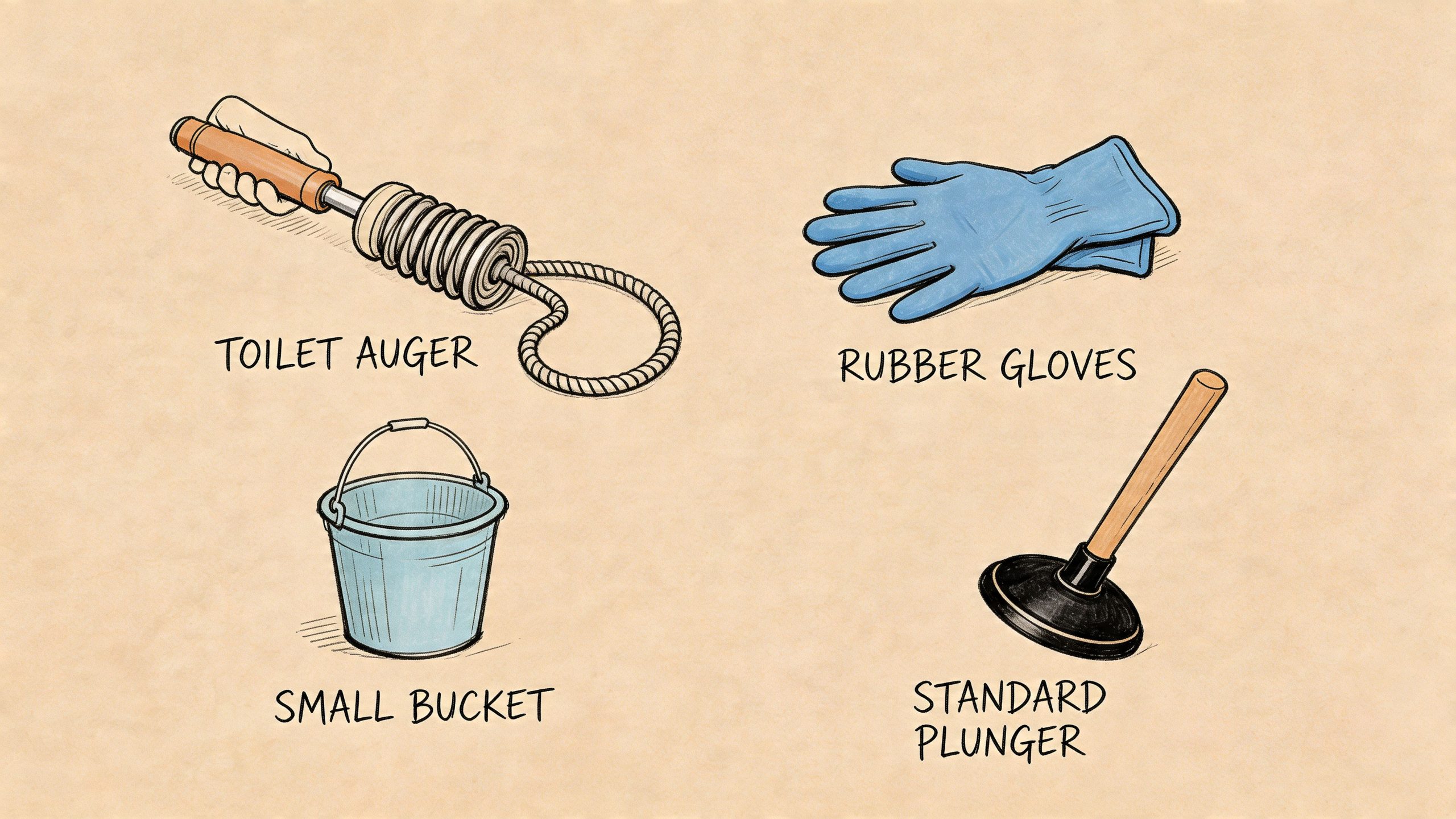
Use a toilet auger, also called a closet auger. Pick a manual model with a 3 to 6 foot cable, a flexible 1/4-inch to 3/8-inch cable, and a bowl guard or protective sleeve. That setup is made for a toilet trap. It follows the bend better and lowers the chance of scratching the porcelain.
A sink snake is a poor substitute. It kinks easily, slips into a bad angle, and can leave black marks or scratches inside the bowl. Around Roswell and Alpharetta, I see plenty of toilets that still have the clog and now need cosmetic repair too.
If you are not sure whether you are dealing with a simple toilet stoppage or something that needs a broader fix, this page on drain cleaning and toilet clog service lays out the difference clearly.
What else to keep within reach
Set everything out first so you are not hunting for supplies with wet gloves on.
- Rubber gloves: Toilet water carries bacteria even if it looks clean.
- Old towels or rags: Lay them around the base and in front of the bowl.
- A small bucket: Use it for dirty water, debris, or the auger head when it comes back out.
- A flange plunger: In plenty of cases, a few correct plunges clear the stoppage without needing the auger.
- Disinfectant: Clean the cable, handle, and any splash areas when the job is done.
One more thing helps. Wear older clothes and shoes with good traction. Bathroom tile gets slick fast.
Prep the bathroom before the cable goes in
Shut off the water at the stop valve behind the toilet. Then flush once to lower the water level in the bowl. If the water stays high, scoop some out carefully into the bucket so you do not slosh contaminated water across the floor.
Clear the work area next. Move bath mats, trash cans, and anything sitting beside the toilet. Give the auger handle enough space to turn without banging into the vanity or wall.
Keep the bucket close.
That matters even more in older North Metro Atlanta homes where bathrooms can be tight and shutoff valves do not always turn smoothly. If the valve feels stuck or starts to seep, stop cranking on it. A small clog is cheaper than a broken shutoff flooding the room.
What to leave out of this job
Skip chemical drain cleaners. They rarely fix a true toilet blockage, and they leave harsh water in the bowl for the person handling the auger. The National Association of Home Builders also notes that harsh chemical drain cleaners can damage some plumbing materials over time in its home maintenance guidance on drains.
Skip brute force too. If the plan is to ram the cable through no matter what, that is the point to stop. Toilets crack, porcelain scratches, and a lodged object can wedge in tighter.
A careful setup gives you a cleaner shot at clearing the clog. It also helps you notice early signs that this problem may be bigger than one toilet.
How to Properly Use a Toilet Auger to Clear a Clog
A toilet auger clears a clog with control, not force. Slow hands beat strong hands every time.
Position the auger correctly
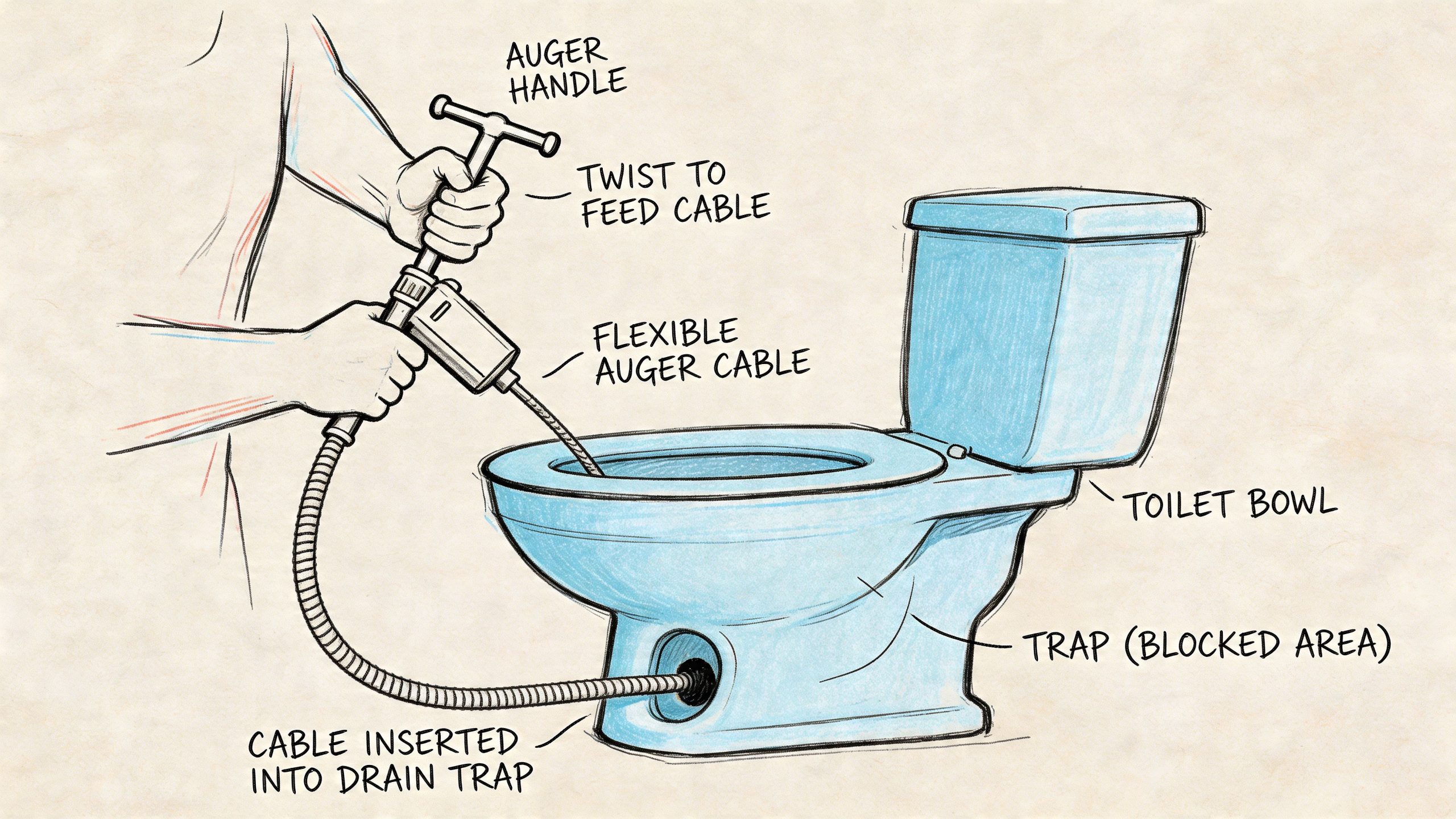
Lower the protective sleeve into the bowl and seat it at the drain opening. Keep the cable lined up with the toilet’s natural trap curve. If your wrist is twisted and the tool feels off-center, reset before you start turning.
That sleeve protects the porcelain. If you hear scraping or feel the cable rubbing the bowl, stop and correct the angle. In my experience, scratches happen fast and homeowners usually notice them after the clog is still there.
Feed the cable with slow pressure
Turn the handle clockwise and apply light forward pressure. Let the cable follow the bend in the trap. A toilet auger is built for that short curved path, not for hard ramming.
Your hands will tell you a lot if you pay attention.
- Soft resistance: Usually paper, waste, or wipes
- Springy drag: Often the cable riding the trap correctly
- Hard stop: Often a toy, hygiene product, dense buildup, or a bad angle
A hard stop deserves caution. In North Metro Atlanta, I see plenty of toilets that are clogged by wipes and paper, but I also see combs, air freshener clips, and kid toys lodged right in the trap. If it feels solid and fixed in place, pushing harder can wedge it tighter or crack older porcelain.
If the cable stops hard, pull back a few inches, reset the angle, and try again with a lighter touch.
Work the blockage instead of driving straight through it
Once you contact the clog, use short push-pull strokes while keeping a steady clockwise turn. The goal is to break up soft material or snag something fibrous enough to draw it back.
For a simple clog, stick to this pattern:
- Advance a little to meet the blockage
- Back off slightly to give the head room to catch or loosen it
- Turn steadily so the cable keeps working
- Repeat patiently until the resistance changes
You are trying to open a path through the trap. If the cable suddenly frees up, that can mean the clog broke apart. It can also mean the tip slipped past part of it. That matters, because a partial opening may give you one weak flush and then plug right back up.
Retract the auger the right way
Pull the cable back into the sleeve as you turn the handle. Keep it controlled and close to the bowl. Yanking a loose cable out is how dirty water ends up on the seat, floor, and your clothes.
Any debris that comes back should go straight into the bucket. Clean the cable before storing it. A disinfectant spray works fine for most homeowners.
If the toilet keeps clogging after a careful auger attempt, or if more than one fixture is acting up, it is smarter to stop and schedule toilet clog and drain cleaning service than to keep repeating the same failed steps.
Test the flush in stages
Bring the water back on and let the tank fill. Then test the toilet in a controlled way.
- Add a small amount of water to the bowl and watch whether it drops at a normal speed
- Flush once while watching closely for a normal rise and full drain
- Shut the water back off immediately if the bowl starts climbing too high
A good flush should look boring. Fast refill, normal swirl, clean drain. If the bowl rises higher than usual, drains slowly, or gurgles, the line may only be partly open.
That is a common point where a simple toilet clog turns out to be something farther down the line. Around North Metro Atlanta, older homes with mature trees and aging sewer lines can show up first as a stubborn toilet clog. If the shower, tub, or another toilet starts acting odd too, stop the DIY work before you trade one clogged fixture for a whole-house backup.
What usually works and what usually causes trouble
Homeowners get the best results when they stay patient, keep the cable aligned, and treat resistance as information. They get into trouble when they use a general drain snake, over-crank the handle, or keep forcing the auger after hitting a solid obstruction.
A toilet auger is a useful tool for the right kind of clog. It handles paper, waste, and some soft blockages well. It is a poor tool for a trapped object, a damaged toilet, or a deeper main line problem. Knowing that difference saves a lot of cleanup.
What to Do When the Snake Doesn’t Work
You feed the auger in, work the handle, pull it back out, and the bowl still looks lazy on the drain. That usually means one of three things. The clog is still partly there, a solid object is hung up where the auger cannot grab it cleanly, or the problem is farther down the branch line or sewer.
Start with one calm reset. Pull the auger out fully, wipe the cable clean, and inspect the head. If you see heavy paper, wipes, or stringy debris, the auger probably reached the blockage but did not clear all of it. One more pass is reasonable if the cable still moves freely and you are not forcing it around the trap.
Change only one thing on the second attempt. Adjust the angle slightly, keep steady pressure, and stop the moment the cable binds hard. If the handle starts fighting you, or the cable wants to kink, quit there. Forcing a toilet auger is how homeowners scratch porcelain, wedge the cable, or shove a blockage tighter.
A stubborn clog usually leaves clues outside the bowl. Use those clues before you keep cranking.
| Symptom | What It Usually Points To | Best Next Step |
|---|---|---|
| Bowl drains a little, but still slow | Partial blockage in the toilet trap or nearby drain | Try one final careful pass, then stop |
| Water rises and drops with a gurgle | Restricted drain line, sometimes beyond the toilet | Check nearby fixtures before flushing again |
| Shower, tub, or sink reacts when toilet flushes | Shared drain line problem | Treat it as a system issue, not a toilet issue |
| More than one fixture is slow or backing up | Main drain or sewer line trouble | Call for diagnosis |
| Sewage odor in the bathroom or yard | Wastewater is not moving out the way it should | Stop DIY work |
Foreign objects are a different job. If someone in the house flushed a toy, toothbrush cap, air freshener, or anything rigid, a toilet auger may only push it deeper or wedge it in the trap. At that point, the smarter move is diagnosis first. A sewer camera inspection for toilet and drain line problems shows whether you are dealing with a trapped object, a heavy buildup, or a problem farther down the line.
That matters around North Metro Atlanta more than many homeowners realize.
In older parts of Roswell, Marietta, Canton, and nearby areas, I see toilet clogs that turn out to be early warnings of a larger sewer problem. Mature trees, older sewer lines, and patched-together drain systems can all show up first as a single stubborn toilet. Then the hall bath starts gurgling. Then the shower gets slow. Then laundry day turns a nuisance into a backup.
If the toilet has been augered correctly and still acts up, stop treating it like a simple paper clog. That is the point where extra effort usually creates extra cleanup.
Know Your Limits When to Call a Professional Plumber
A smart homeowner doesn't have to do every plumbing job alone. A smart homeowner knows when the risk stops being worth it.
A clogged toilet can start as a simple DIY fix and cross the line fast. One bad push can scratch the bowl, jam the cable, or turn a local toilet clog into a messy cleanup. If you're in Alpharetta, Marietta, Woodstock, Acworth, or anywhere across North Metro Atlanta and the signs point beyond a routine clog, the best move is to stop.
Red flags that mean put the auger down
Call a plumber if any of these apply:
- More than one fixture is affected: That points toward drain cleaning or sewer backup work, not just a toilet clog.
- You suspect a foreign object: Toys, brushes, caps, and similar items often need a more precise retrieval method.
- Water leaks from the toilet base: That may be a seal problem, a bad wax ring, or a crack that needs repair.
- The clog comes back repeatedly: A recurring blockage usually means the original cause was never really cleared.
- You smell sewage: That's a warning sign, especially if the odor is inside or out in the yard.
- The cable won't move freely: A stuck or kinked auger can create a second problem immediately.
Why professional diagnosis saves trouble
A licensed plumber brings more than stronger tools. The main advantage is diagnosis. That's especially important when a toilet problem overlaps with bigger homeowner concerns like sewer repair in Roswell, sewer replacement in older neighborhoods, main water line repair in Alpharetta, burst pipe repair after a cold snap, or an emergency plumber call in the middle of the night.
In North Metro Atlanta, homeowners also deal with symptom-based issues that sound unrelated at first. Slow drains, low water pressure, sewage odor, or water in the yard can all tie back to plumbing problems that need a broader look.
The cheapest repair is often the one that stops damage early, before a toilet clog turns into floor damage, line damage, or a full sewer backup.
If the toilet itself is damaged, rocking, leaking, or due for replacement instead of another round of wrestling with clogs, toilet repair and replacement help is the right direction.
Emergency situations are different
If wastewater is rising, another fixture starts backing up, or you have sewage where it shouldn't be, that isn't a “wait until the weekend” problem. That's when people start searching for a 24 hour plumber, emergency plumber, or drain cleaning near me for good reason.
Fast response matters because plumbing problems spread. Water finds the floor, the subfloor, the baseboards, and then the repair gets bigger than it needed to be.
Frequently Asked Questions About Toilet Clogs
Should I plunge first or snake first
Start with a flange plunger if the toilet isn’t threatening to overflow and the clog seems ordinary. A plunger works well for clogs close to the trap. A toilet auger is the better next move when plunging doesn't change anything or when the blockage feels deeper.
Can I use chemical drain cleaner in a toilet
No. The verified guidance on toilet snaking says chemical use is ineffective in toilets, with 0 percent reach because of toilet design, plus corrosion risk, as noted in this This Old House explanation of how to snake a toilet. It also creates a more hazardous cleanup if someone later has to handle the bowl or cable.
What keeps causing toilet clogs
In day-to-day homes, the biggest repeat offenders are usually wipes, heavy paper use, and objects that never should've been flushed. Around North Metro Atlanta, I’d also pay attention when clogs happen alongside slow drains elsewhere, because that points away from the toilet and toward the drainage system.
Are so-called flushable wipes really safe
From what plumbers see in the field, they cause trouble far more often than homeowners expect. If your household uses wipes, put a trash can beside the toilet and make that the rule.
How do I keep the bathroom cleaner after a clog
Contain the mess early. Shut off the water, protect the floor with towels, wear gloves, and disinfect the auger and nearby surfaces after you're done. If you manage shared spaces or just want better sanitation habits, this guide on proven protocols for keeping public bathrooms clean has useful cleaning practices that also make sense at home.
How much does professional toilet clog service cost
It depends on what’s causing the backup. A straightforward toilet clog is different from a main line issue, sewer camera inspection, or toilet replacement. The only honest answer is an on-site evaluation and a clear quote based on the problem.
When should I stop trying myself
Stop when the problem no longer looks like a normal toilet clog. That includes repeated failed attempts, signs of a foreign object, leaking at the base, sewage smell, or multiple fixtures acting up at once.
If your toilet still won’t clear, or the symptoms point to something bigger than a simple clog, JMJ Plumbing is a solid local call for North Metro Atlanta homeowners. They serve communities like Acworth, Alpharetta, Canton, Cumming, Johns Creek, Marietta, Roswell, and Woodstock with licensed plumbing help, 24/7 emergency service, drain cleaning, sewer diagnostics, leak repair, water line work, and honest on-site recommendations.