Fixing Water Pipe Knocking: Causes & Expert Solutions

You hear it when the dishwasher finishes. Or right after someone flushes a toilet upstairs. A sharp thump in the wall. Then a harder bang a few days later. That noise gets your attention because it doesn't sound normal, and it isn't.
Water pipe knocking usually means your plumbing system is reacting to movement, pressure, heat, or sediment somewhere it shouldn't. Sometimes the fix is simple. Sometimes that noise is the first warning before a leak, a failed fitting, or a burst pipe repair call in the middle of the night.
Homeowners in Woodstock, Marietta, Roswell, Alpharetta, and across North Metro Atlanta run into this a lot, especially in homes with newer fixtures, older water heaters, or pressure problems at the main line. The good news is that pipe noise can usually be traced to a clear cause. Once you know what kind of noise you have, the repair path gets much easier.
That Banging in Your Walls Is More Than Just Annoying
A lot of people live with pipe noise longer than they should. They assume it's just “old house noise” or something the builder did years ago. Then the sound gets louder, starts happening more often, or shows up with a new symptom like low water pressure, a dripping shutoff valve, or a stain on the ceiling.
That's why water pipe knocking matters. The sound itself is the warning. The underlying issue is what's causing the pipe to move or the pressure to spike.
When a pipe bangs, one of a few things is usually happening. Water flow is stopping too fast and slamming the system. A loose section of pipe is hitting framing. Hot water piping is expanding and shifting. Or a water heater is rumbling because sediment has built up in the tank. Each one creates a different sound, and each one has a different fix.
Practical rule: If the noise is getting louder or happening more often, don't wait for visible damage. Plumbing problems usually show up in sound before they show up in drywall.
In real homes, this often starts small. A single thud when the washing machine shuts off. A quick knock after a shower valve closes. A tapping noise at night when no one is using water. Those details matter because they point to the source.
The biggest mistake is treating every pipe noise like water hammer. Water hammer is common, but it isn't the only reason pipes knock. If you install the wrong fix, the noise may stay exactly the same.
What works is a simple approach. Identify when the sound happens, what fixture triggers it, whether it involves hot water, and whether the noise comes as one hard bang or a series of taps. Once you sort that out, you can decide whether this is a DIY job, a pressure problem, a water heater issue, or something that needs a licensed plumber before it turns into leak repair or emergency service.
Why Your Pipes Are Suddenly So Loud
The reason pipe noise feels so random is that different plumbing problems make different sounds. A hard bang right when a valve closes is not the same problem as a tapping sound after hot water runs. A rumble from the water heater is its own category.
Water hammer is the hardest hit
Water hammer is a pressure surge. Water is moving through the line, then a valve or fixture shuts off fast, and that moving column of water has to stop immediately. The shock travels through the piping and you hear it as a bang.
That force can be much more severe than most homeowners realize. According to Flomatic's water hammer overview, for every 1 foot per second change in flow velocity, approximately 54 psi of pressure surge is generated. In a typical residential setup, that surge can go over 640 psi, which is more than six times normal household water pressure.
Modern fixtures often make this worse. Fast-closing mixer taps, dishwashers, washing machines, ice makers, and similar fixtures shut water off quickly. They're convenient, but they can be rough on plumbing when the system isn't set up to absorb the shock.
Loose pipes and heater noise sound different
Not every bang is hydraulic shock. Sometimes the pipe itself is moving because it isn't secured well. When water starts or stops, that loose section shifts and knocks against a stud, joist, strap, or other pipe.
If the sound happens when no faucet is on, listen closely to the type of noise. A tick or knock after hot water use often points toward thermal movement in the pipe. A rumble or banging from the heater area often points toward sediment in the tank.
Here's a quick sorting tool.
| Noise Description | Likely Cause | Urgency Level |
|---|---|---|
| Single hard bang when a faucet or appliance shuts off | Water hammer | High |
| Rattle or repeated knocking while water is flowing | Loose pipe or poor support | Moderate |
| Tapping after hot water use, especially when pipes cool | Thermal expansion | Moderate |
| Banging or rumbling near the water heater when no water is running | Sediment buildup in water heater | Moderate to high |
If you suspect pressure is part of the problem, it helps to understand how a regulator affects the whole house. This guide to PRV and water pressure issues is a useful starting point.
A loud pipe is usually reacting to a trigger. The job is to find the trigger first, not guess at the repair.
Your Step-by-Step Diagnostic Checklist
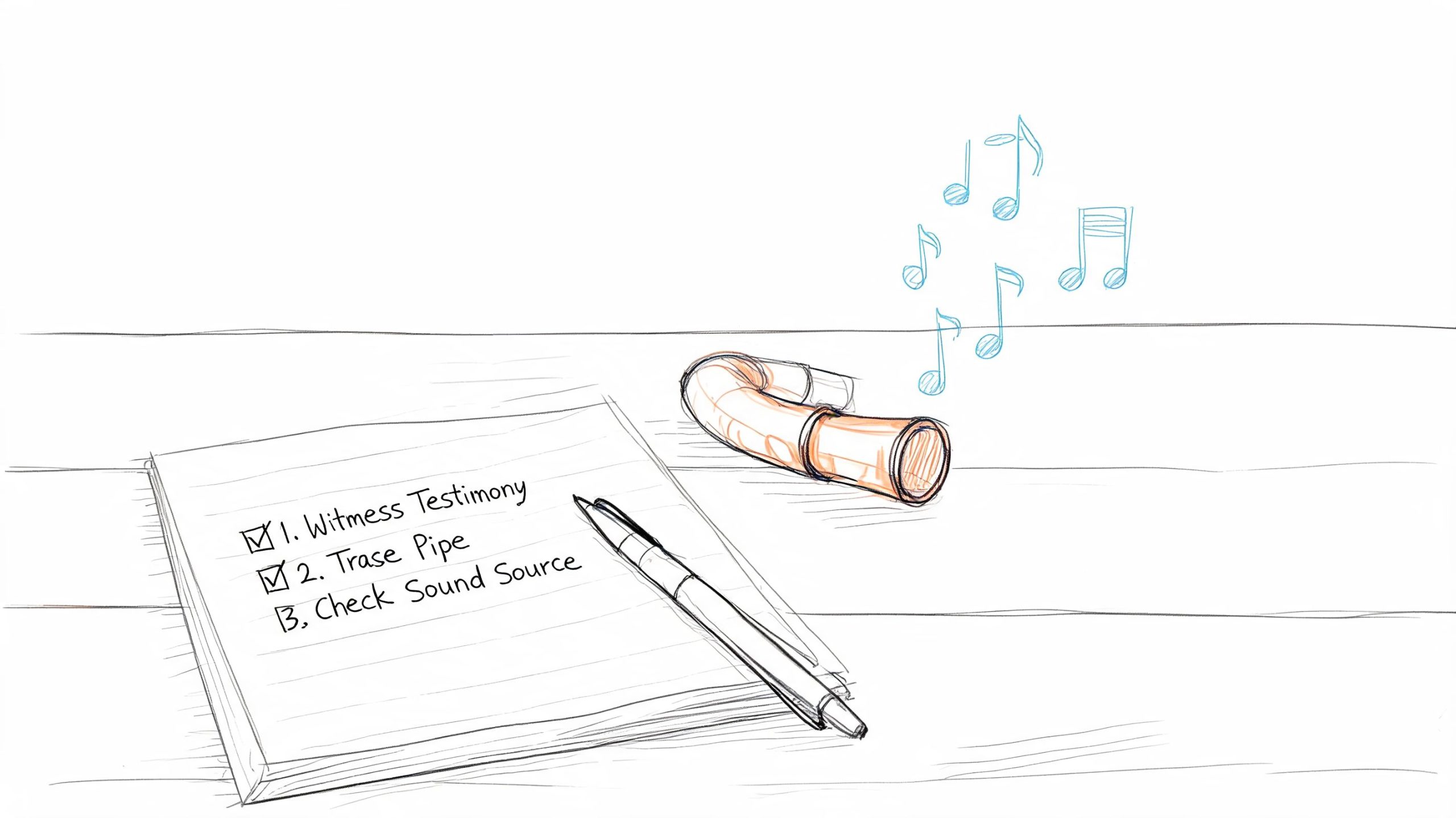
Before you buy parts or open a wall, track the noise. The pattern tells you more than the volume.
Start with when it happens
For the next day or two, keep notes on these questions:
- Which fixture triggers it. Is it the toilet, dishwasher, shower valve, ice maker, or washing machine?
- When the sound occurs. Does it happen when water starts, when it stops, or several minutes later?
- Hot or cold water. If it only happens after hot water use, that pushes the diagnosis in a different direction.
- One bang or several taps. A single thud and a rapid knocking sequence usually point to different causes.
- Same location or moving sound. If the sound always comes from one wall or ceiling bay, that helps narrow the search.
That short log keeps you from treating a thermal issue like water hammer, or a water heater problem like a loose strap.
Use the no-water test
A lot of homeowners get confused when they hear knocking even though nobody is using water. That's a real clue.
According to Total Mechanical's breakdown of knocking pipes when water is not running, thermal expansion accounts for 55% of cases, loose pipe mounting for 25%, and high water pressure for 10%. The same source also notes that sediment in a water heater is another primary cause of banging when no faucets are in use.
Use that to guide your next checks:
- If the noise follows hot water use, think thermal expansion first.
- If the sound comes from a wall or floor cavity, look for poor pipe support where piping is accessible.
- If the whole house feels aggressive, with strong flow and other plumbing symptoms, pressure may be too high.
- If the sound is near the heater, sediment moves up the list.
Field note: Knocking with no water running often sends people looking at toilets and faucets first. In many homes, the better place to start is the hot water side.
Check the accessible areas only
Inspect what you can see safely. Crawlspaces, unfinished basements, garages, utility rooms, and under sinks are the best places to look.
Focus on:
- Horizontal runs near elbows and turns
- Pipes close to framing
- Loose or missing straps
- Visible movement when someone else turns a fixture on and off
If the pipe shifts, clicks, or bumps during that test, you've likely found part of the problem. If everything visible is solid but the noise is still sharp and immediate, the issue is more likely pressure shock than pipe support.
DIY Fixes You Can Try Today And When to Stop
Some water pipe knocking problems respond to safe, basic steps. Others don't. The line between those two matters.
A safe reset for trapped air or old air chambers
If your plumbing has basic air chambers or trapped air in the lines, draining the system can help. Turn off the home's main water supply. Open faucets at the highest and lowest points of the house, both hot and cold, and let the system drain fully. Then close the faucets and turn the water back on slowly.
This can restore a cushion of air in older setups and sometimes reduces minor knocking. It won't fix a true pressure problem or a poorly placed arrestor, but it's a reasonable first step.
If you're not sure where your shutoff is, this main water valve guide is a practical reference before you start.
Secure only what you can reach
If you find a loose pipe in an unfinished area, you may be able to tighten or add a proper strap. The key is to work only on accessible piping. If the pipe is behind finished drywall or packed tight against framing, stop there.
Good DIY judgment looks like this:
- Proceed if the pipe is exposed, stable, and easy to support without forcing it.
- Stop if you have to pry, bend, or over-tighten a line to make it fit.
- Stop if corrosion, active leaking, or damaged fittings are visible.
- Stop if you suspect high pressure at the main or a failing pressure reducing valve.
What doesn't work well is guessing. Swapping random parts, over-strapping a pipe, or cranking on valves can create a leak where there wasn't one before.
One more limit matters. If incoming pressure is above a safe residential range, this is no longer a DIY noise issue. It becomes a system protection issue. At that point, the right fix is diagnosis at the main line, not trial and error under a sink.
Permanent Solutions for Banging Pipes in Your Atlanta Home
Temporary relief is fine for testing. Permanent repair means solving the actual cause.
The fix for true water hammer
For hydraulic shock, water hammer arrestors are the industry-standard solution according to Measure Monitor Control's water hammer guidance. They work like shock absorbers inside the plumbing system, taking the force out of a fast shutoff event.
Proper sizing and placement matter. An arrestor installed in the wrong spot, or selected without considering the fixture load, may do very little. That's why some homeowners install one and still hear banging.
The same source notes that keeping pipe flow velocity at or below 1.5 meters per second (4.9 feet per second) helps keep water hammer effects minimal. That's a design and system issue, not just a parts issue.

Pressure control and pipe support
If pressure is too high, the long-term answer is usually a pressure reducing valve, either adjustment, repair, or replacement depending on the condition of the existing assembly. High pressure doesn't just make noise. It wears on fixtures, valves, supply lines, and appliance components.
Loose pipes need a different repair path. That can mean re-strapping, isolating contact points, adding cushioning where the pipe passes framing, or opening a targeted section of wall to stop repeat movement. When repeated knocking has already stressed the system, it may also make sense to evaluate whether aging piping is due for broader correction. If that's on the table, this page on repiping options gives a good overview.
The right permanent repair should make sense on paper before anyone picks up a wrench. If the diagnosis is vague, the result usually is too.
Don't ignore the water heater side
When the noise traces back to the heater, a proper flush is often the first repair. If sediment keeps building up, the better long-term strategy is prevention.
That's where whole-home filtration can make a real difference. In homes dealing with recurring mineral and sediment issues, a HALO whole-home water filtration system can help protect the water heater, valves, and fixtures from the buildup that starts many of these noises in the first place. It's not just about taste. It's about protecting the plumbing system upstream so the same problem doesn't keep returning.
When to Call a 24-Hour Plumber in Woodstock or Marietta
Some pipe noise can wait a day. Some can't.
If the banging suddenly gets much louder, if a wall or ceiling starts showing moisture, or if your water pressure changes at the same time, that moves the problem into emergency territory. At that point you're not just chasing noise. You may be dealing with a failing fitting, a split line, or the beginning of a burst pipe repair call.
Signs it's time to stop troubleshooting
Call a plumber right away if you notice any of these:
- Visible water damage on drywall, flooring, trim, or ceilings
- A sharp drop in pressure after the noise starts
- A leak at the heater, shutoff, or supply line
- Banging at the main line area or near the pressure regulator
- Water in the yard, which can point toward water line trouble
- No hot water, especially if the heater has also been rumbling or knocking
People often search for “emergency plumber near me,” “24 hour plumber,” “main water line repair,” or “burst pipe repair” in Woodstock, Marietta, Roswell, Alpharetta, Acworth, Canton, Cumming, or Johns Creek. That urgency makes sense. Once pipe movement turns into an active leak, the repair gets bigger fast.
Why local response matters
A plumbing company that knows North Metro Atlanta homes will usually diagnose this faster because the patterns repeat. Pressure issues at the main. Newer fast-shutoff fixtures in remodeled bathrooms and kitchens. Water heater sediment in homes that haven't had routine maintenance. Loose pipe runs in crawlspaces and basement ceilings.
For homeowners comparing providers, it also helps to understand how established local plumbing companies build visibility and service coverage online. This overview of a local marketing partnership for plumbing companies gives background on how service businesses connect with homeowners searching for urgent repairs in specific cities.
If the noise has crossed from nuisance to risk, the next step should be a direct emergency call, not another online guess. For after-hours service, this emergency plumbing page is the right place to start.
If you're dealing with water pipe knocking in Woodstock, Marietta, Roswell, Alpharetta, Acworth, Canton, Cumming, Johns Creek, or nearby North Metro Atlanta communities, JMJ Plumbing can help diagnose the cause and fix it the right way. Whether the issue is water hammer, high pressure, sediment buildup, a failing PRV, or a hidden leak, the team handles emergency plumbing, water heater service, leak repair, repiping, and main water line problems with clear on-site recommendations and 24/7 availability.