Your 8-Point Plumbing Inspection Checklist
A hall bath drain starts gurgling on Monday. By Friday, the shower is draining slow, the toilet needs a second flush, and someone in the house is asking why the hot water runs out faster than it used to. In North Metro Atlanta, that pattern usually means something is changing inside the plumbing system, not that the house is having a random bad week.
Local conditions make those early warnings more important. Clay soil around many Metro Atlanta homes can shift and put stress on buried sewer lines. Water quality can also leave scale behind in fixtures, heaters, and supply piping over time. A small drip under a sink can turn into swollen cabinet bottoms and damaged flooring. A sewer problem can begin with slow drains and end with a backup in the lowest bathroom.
That is why a plumbing inspection checklist matters. It gives homeowners a practical way to spot trouble early, separate a simple fix from a larger repair, and decide when a pro should step in. Guidance from the International Association of Certified Home Inspectors on plumbing systems supports the same basic idea. Regular inspection helps catch leaks, drainage problems, pressure issues, water heater wear, and safety concerns before they become expensive surprises.
Use this checklist as both a homeowner walk-through and a professional screening tool. Some items are easy to check yourself. Others, like a pressure regulator problem, a sewer line concern tied to soil movement, trenchless sewer repair options, or water treatment choices such as water pressure regulator inspection and adjustment, deserve a closer look from a licensed plumber. The goal is simple. Protect the house, avoid emergency calls, and know what action makes sense before minor symptoms turn into major repairs.
1. Water Pressure and Flow Rate Testing
You notice it during the morning rush. One person starts a shower, someone else turns on the kitchen faucet, and the water upstairs drops off or swings hot and cold. That is often the first sign that pressure or flow needs attention.
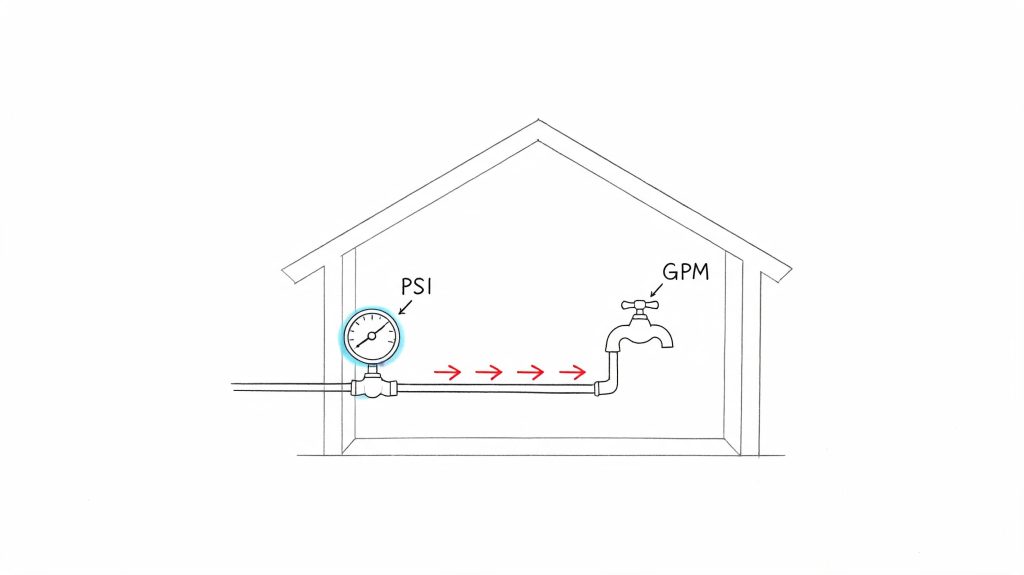
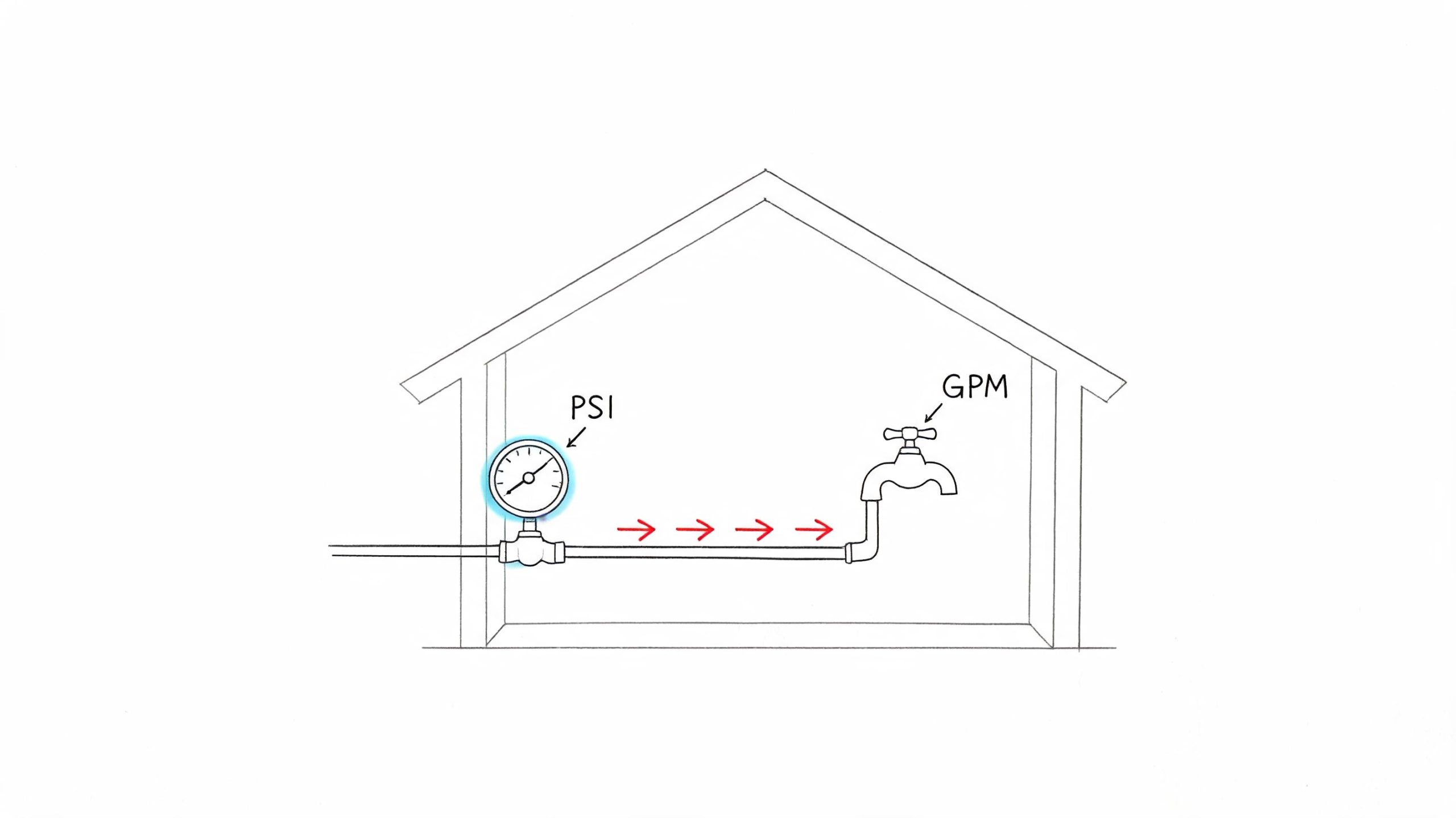
For a home inspection, water pressure is typically expected to fall within the 40 to 80 psi range noted by InterNACHI. Readings outside that range deserve a closer look. Low pressure can come from scale, a partially closed valve, a failing fixture cartridge, or a hidden supply problem. High pressure is harder on toilet fill valves, faucet cartridges, washing machine hoses, and ice maker lines. In North Metro Atlanta, I also keep regional water quality in mind because mineral buildup can slowly choke down flow at fixtures and inside older piping.
What to check first
Start with a simple pattern check around the house. Run a bathroom sink, kitchen faucet, shower, and an outside spigot. If one fixture performs poorly, the problem is usually local. If the whole house struggles, look harder at the main shutoff, pressure reducing valve, water service line, or a restriction affecting multiple branches.
Then test under normal use, not just one open faucet. Flush a toilet while a sink or shower is running. Homes can appear fine during a quick walk-through and still have pressure drop issues once two fixtures are in play. That matters for families, and it matters during a sale because buyers feel weak performance right away even if they never ask for a formal pressure test.
A pressure gauge on a hose bib gives you a useful baseline. Write the reading down. Test once when no fixtures are running, then again while water is being used inside. If pressure is high or fluctuates, a failing regulator is a common cause. If that is the concern, a water pressure regulator inspection and adjustment service is the right next step.
A few field notes help homeowners avoid bad assumptions:
- Compare several fixtures: One clogged aerator does not mean the house has a supply problem.
- Watch for pressure drop under load: Stable pressure at rest can still turn into poor shower performance once another fixture opens.
- Listen for pipe noise: Banging or chattering at hose bibs and quick-closing valves often points to pressure that is too high or poorly controlled.
- Pay attention to older homes: In parts of Roswell, Marietta, and Alpharetta, aging valves and mineral scale can limit flow even when static pressure looks acceptable.
If pressure is low at one bathroom, a small repair may solve it. If pressure is high throughout the house, fix it sooner rather than later. If flow problems show up with multiple fixtures and the home also has older piping or signs of soil movement outside, that is the point where a professional inspection can save guesswork and keep a simple pressure complaint from turning into a larger pipe or sewer diagnosis.
2. Leak Detection and Water Damage Assessment
You step into the hall bath, and the base of the toilet feels a little soft underfoot. Nothing is dripping. No pipe is making noise. That is how a lot of expensive plumbing damage starts in North Metro Atlanta homes. A slow leak can sit long enough to rot subfloor, stain ceilings, and feed mold before it ever becomes obvious.
A good inspection here is less about finding active drips and more about reading the clues. Check under sinks, around toilet bases, at shower trim plates, below upstairs bathrooms, and around the water heater. In older homes around Marietta, Roswell, and Alpharetta, I also pay attention to walls and floors near previous remodel work, because a bad connection hidden behind new finishes can stay unnoticed for a long time.

The places homeowners miss most
Cabinets get checked. The actual misses are behind toilets, at tub and shower walls, around ceiling penetrations, and at the far side of the water heater where rust and seepage first show up. In our area, hard water can leave crust at stops and supply lines before you ever see a drop hit the floor.
The water meter is still one of the best homeowner checks. Shut off fixtures and appliances that use water, then watch the meter. If it keeps moving, water is going somewhere. That does not tell you whether the problem is a toilet flapper, a slab leak, or a buried line, but it tells you the next step is diagnosis, not guesswork.
Look for signs that help separate an old stain from an active problem:
- Fresh or expanding discoloration: A dry, unchanged mark matters less than staining that is dark, cool, or getting larger.
- Soft flooring near toilets or tubs: This often points to a failed wax ring, loose caulk masking a leak, or long-term splash damage that never dried properly.
- Corrosion at shutoffs and braided connectors: Green, white, or rusty buildup often shows up before steady dripping starts.
- Dampness at the water heater base: Sometimes it is condensation. Sometimes it is the tank, a relief valve issue, or a slow fitting leak.
- Musty odors with no clear source: Hidden moisture behind walls or under flooring is a common reason.
One trade-off homeowners should understand is this. A small visible leak is not always the whole problem. Water travels. A ceiling stain under a bathroom may come from a shower valve, a drain connection, or a failed toilet seal a few feet away. If the clues point toward a hidden waste line issue, a sewer camera inspection for hidden drain and line problems can rule out a larger system defect before you start opening drywall.
If the issue looks limited to a branch drain or a simple blockage, basic maintenance can help you narrow it down before calling. Service That Boiler's drainage tips are a useful reference for that first pass.
In Acworth and Kennesaw, I would rather see a homeowner act on a suspicious spot early than wait for an after-hours emergency. Catching a leak at the stain, odor, or soft-floor stage usually means a smaller repair bill and less damage to the house around it.
3. Drain and Sewer Line Inspection
A toilet flushes, then the shower gurgles. Later, the floor drain in the basement or lower level gets a little water around it. That pattern points past a simple fixture clog and toward a drain or sewer line problem that needs a closer look.
North Metro Atlanta homes see this a lot for a reason. Older piping, root intrusion, and clay soil that expands and shifts after wet and dry cycles can pull joints apart or leave a section of sewer line holding waste instead of carrying it away. Add our regional water quality and years of scale inside drain piping, and a line can go from slow to unreliable without much warning.

What separates a branch drain issue from a main sewer issue
A single sink that drains slowly is usually local to that fixture or branch. Multiple fixtures acting up together, sewage odor indoors or near the yard, and backup at the lowest drain in the house deserve a different response. Those symptoms tell me to stop guessing and verify the line condition.
Homeowners can do a useful first pass before calling:
- Run water at more than one fixture: If the tub reacts when the toilet flushes, or the shower slows when the washer drains, the problem may be farther downstream.
- Check the cleanout area: Know where it is and look for signs of overflow, staining, or odor around the cap.
- Walk the yard: Soft spots, lush strips of grass, sunken areas, or a sewer smell near the line path can point to a buried defect.
- Look at the history: If the house needs repeated drain cleaning, the line may have roots, a belly, separated joints, or heavy buildup.
The trade-off is simple. A basic snaking may restore flow for now, but it does not tell you why the stoppage happened or whether it will return next month. A camera inspection does. If the symptoms suggest a larger line defect, a sewer camera inspection for diagnosing roots, bellies, and cracked sewer lines gives a clear view before anyone recommends excavation or trenchless sewer repair.
For homeowners handling a minor branch clog first, Service That Boiler's drainage tips are a practical starting point.
In Canton, Woodstock, Acworth, and Kennesaw, I get more cautious when mature trees are close to the sewer path or the home has a long record of backups. Repeated clogs usually mean the line needs diagnosis, not another temporary clearing.
4. Water Heater Condition and Safety Inspection
You find a puddle in the garage at 6 a.m., and now everyone in the house needs a shower. That is how water heater problems usually show up. They stay quiet for months, then force a same-day decision.
A better inspection catches the warning signs while you still have options. For a homeowner, that means checking the tank body, fittings, venting or electrical setup, the temperature and pressure relief valve discharge pipe, and the area around the heater. For a plumber, it also means asking how the unit has been performing. Slow recovery, popping or rumbling, temperature swings, and rusty hot water all help narrow down whether the issue is sediment, age, control failure, or a tank that is starting to give out. InterNACHI's water heater inspection guidance is a useful reference for the safety points inspectors look for.

Signs that shouldn't wait
Rust at the connections matters. Moisture at the base matters more. If the steel tank itself is leaking, replacement is usually the practical call, not repair.
Gas heaters need close attention at the draft hood and vent connector. Loose joints, corrosion, scorch marks, or backdrafting can point to a safety problem, not just a performance complaint. Electric heaters have their own pattern. A bad element or thermostat can leave you with partial hot water, but I still check the shutoff, pan, piping, and surrounding area because the heater is not always the only problem.
In North Metro Atlanta, water quality and sediment buildup shorten the life of some heaters faster than homeowners expect. Hardness and mineral content can settle in the tank, lower efficiency, and make the unit run louder. If the home already has scale on fixtures or inconsistent water quality, the heater deserves extra attention, and it may be time to consider whole-house treatment along with the appliance itself.
Here's what belongs on the homeowner side of the checklist:
- Check the relief valve discharge pipe: It should be installed, directed downward, and terminate safely.
- Look for rust, white mineral crust, or streaking: Focus on the nipples, shutoff area, and base of the tank.
- Listen during a heating cycle: Rumbling or popping often points to sediment cooking at the bottom of the tank.
- Watch for burner or access panel issues: Soot, scorching, or loose covers deserve a professional look.
- Pay attention to related fixture behavior: A toilet that keeps running can waste hot water in some setups. This toilet tank float valve guide helps with one simple check homeowners can make.
I see this come up often during pre-sale inspections in Roswell, Johns Creek, and Cumming. An older heater is not automatically a deal breaker, but visible corrosion, missing safety piping, or signs of seepage will put buyers and inspectors on edge fast. A quick look now gives you time to flush the tank, correct a safety issue, or plan replacement before the unit fails on its own schedule.
5. Fixture Inspection and Installation Compliance
Fixtures tell you a lot about the health of the plumbing system. A faucet that spits air, a toilet that rocks, a shower valve that won't hold temperature, or an outside spigot that drips after shutoff can all point to larger wear inside the system.
This part of the plumbing inspection checklist should cover sinks, toilets, tubs, showers, hose bibs, angle stops, supply hoses, traps, and drain performance. I also like to separate simple service items from installation concerns. A worn flapper is one thing. A fixture installed with poor support, bad shutoff access, or chronic drainage problems is another.
What works and what doesn't
What works is simple, hands-on testing. Turn the faucet on and off. Flush the toilet more than once. Run water long enough to see if the drain clears. Open the cabinet and inspect the stops and supply lines instead of assuming everything under there is fine.
What doesn't work is a quick glance from the doorway. I've seen plenty of “everything looked good” bathrooms with active seepage under the lavatory and a toilet base just starting to fail.
A practical fixture check includes:
- Accessible shutoffs: Every fixture should have a valve you can reach and operate.
- Stable toilets: Any movement at the base deserves attention.
- Healthy supply hoses: Kinks, corrosion, and bulges mean replacement is smarter than waiting.
- Clean drainage: Slow sink drainage may be a local trap issue or the start of a branch line problem.
For homeowners dealing with a toilet problem, this toilet tank float valve guide is helpful for understanding one of the most common internal toilet faults.
In Acworth, Marietta, and Alpharetta, this section matters a lot before listing a home. Small fixture issues don't usually kill a sale, but they do create inspection objections and last-minute repair requests.
6. Pipe Material Assessment and Corrosion Evaluation
Pipe material changes how I read the rest of the inspection. Copper, PEX, PVC, cast iron, and older galvanized lines all fail in different ways. If you don't know what's in the house, you can miss the complete picture.
This is especially important in older parts of Roswell, Marietta, and Sandy Springs, where one house may have a mix of original piping and later repairs. Mixed materials aren't automatically wrong, but they do deserve a close look at transitions, supports, shutoffs, and visible corrosion.
Read the pipe, not just the symptom
Copper can show exterior corrosion and pinhole-style trouble. Galvanized steel often fools people because the outside looks passable while the inside has narrowed badly. Cast iron drain lines may keep working until scaling, cracking, or channel rot starts turning normal use into frequent drain cleaning and sewer odor complaints.
I'd inspect for:
- Discoloration and buildup: Especially at joints, valves, and material transitions.
- Patchwork repairs: Multiple spot fixes can suggest a bigger repipe or sectional replacement conversation.
- Brittle plastic or old fittings: Aging materials don't like being disturbed during other repairs.
- Cast iron drain clues: Flaking, rust staining, and repeat backups deserve more than a surface opinion.
Old galvanized lines often create a false diagnosis. Homeowners think they need fixture work when the real problem is restricted pipe.
If you're weighing repair versus water line replacement or a larger repipe, the material matters as much as the symptom. For a homeowner comparing options, this guide to plumbing material choices gives a useful overview of how different pipe types are typically considered.
In North Metro Atlanta, I also like tying this section back to water quality. If the water is hard or aggressive, pipe wear and fixture wear usually show up together.
7. Water Quality Testing and Treatment Assessment
Some plumbing problems start in the water itself. Scale on faucets, white buildup on shower glass, odd taste, sediment at the bottom of the tub, and early wear on valves can all point toward water quality issues rather than just fixture age.
That matters more now because modern plumbing checklists increasingly line up with smart-diagnostic workflows and water monitoring. One market report projects U.S. plumbing demand around $170 billion, while the same source notes growing adoption of leak detection, water monitoring, and smart plumbing features. That doesn't mean every home needs gadgets. It does mean homeowners are paying closer attention to system health, not just visible leaks.
Why testing helps the rest of the system
When water carries a lot of sediment or leaves heavy scale, it affects more than taste. It can shorten fixture life, reduce water heater efficiency, and make low water pressure complaints harder to sort out because mineral buildup starts acting like a restriction in multiple places.
A practical inspection here includes the look and smell of the water, visible scale at fixtures, sediment signs, and whether the home already has treatment equipment. If there's filtration or conditioning in place, it should be inspected like any other part of the plumbing system, not ignored as an appliance in the corner.
A few items worth noting:
- Taste and odor changes: These are often the first reason homeowners start asking questions.
- Scale patterns: Showerheads and faucet aerators usually tell the story early.
- Sediment evidence: Bathtubs, strainers, and water heater drains can reveal it.
- Existing treatment equipment: Filters need service, and older setups may no longer match the home's needs.
If better whole-home treatment is part of the solution, this HALO water filtration information shows the kind of system many homeowners ask about when they want to protect fixtures and improve water quality at the same time.
In Kennesaw, Cumming, and Johns Creek, I often see homeowners assume they only have a “taste” issue when the plumbing is showing clear scale and maintenance stress too.
8. Code Compliance and Safety Verification
Code issues don't always look dramatic. Sometimes it's a missing backflow device. Sometimes it's bad venting behind a remodel. Sometimes it's a water heater relief discharge setup that was never corrected after replacement. These details matter because plumbing that “kind of works” can still be unsafe or fail a sale inspection.
A stronger checklist treats safety and compliance as part of the core inspection, not an afterthought. Commercial guidance specifically includes backflow devices, valves, heaters, sewer systems, and pressure checks because repeatable inspection is about preventing damage and keeping systems code-aware, as described in this commercial plumbing inspection framework.
Where compliance problems usually show up
Bathroom remodels are high on the list. So are water heater swaps, basement finishes, exterior hose connections, and any work where someone extended or rerouted drains and vents. In older homes around Cobb County and Cherokee County, you also run into systems that may be functional but still need a licensed plumber's judgment on what should be updated during repairs.
Here's what I'd verify:
- Backflow protection: Important anywhere contamination could move the wrong direction.
- Proper venting: Poor venting often shows up as gurgling and slow drains.
- Trap and drain setup: Wrong fittings and bad pitch create recurring service calls.
- Safe shutoff access: In an emergency, you need to reach the valve fast.
A code issue usually costs less to fix before a closing, remodel inspection, or emergency than it does after.
For homeowners in Milton, Roswell, and Cumming, this part becomes especially important before listing a house or starting renovations. It's much easier to fix a known compliance issue on your schedule than when a buyer, inspector, or emergency plumber finds it for you.
8-Point Plumbing Inspection Comparison
| Service | Implementation Complexity 🔄 | Resource Requirements ⚡ | Expected Outcomes 📊 | Ideal Use Cases 💡 | Key Advantages ⭐ |
|---|---|---|---|---|---|
| Water Pressure and Flow Rate Testing | Moderate 🔄, calibrated gauges; multi-point checks | Pressure gauges, flow meters, trained technician; 30–90 min ⚡ | Pinpoint pressure/flow faults; baseline readings; regulator/repair recommendations | Low/high pressure complaints; pre-listing; water-heater performance checks | Quick detection; prevents fixture/appliance damage; improves heater efficiency |
| Leak Detection and Water Damage Assessment | High 🔄, visual, acoustic, thermal methods; may be invasive | Moisture meters, acoustic devices, thermal camera, skilled techs; possible wall access ⚡ | Locate active/hidden leaks; assess damage extent; prioritize repairs | Suspected hidden leaks, water stains, mold, insurance claims, emergencies | Early damage prevention; saves repair costs; supports insurance documentation |
| Drain and Sewer Line Inspection | High 🔄, CCTV runs, mapping, possible access permits | CCTV camera snake, locators, operator crew; excavation if repairs needed ⚡ | Detect clogs, roots, cracks, bellies; video evidence for decisions | Recurring backups, older sewer systems, pre-listing main inspections | Prevents backups; guides repairs; provides verifiable video evidence |
| Water Heater Condition and Safety Inspection | Moderate 🔄, safety tests plus internal condition checks | Temp/pressure gauges, TPR/anode tools, gas-combustion testers for gas units ⚡ | Identify leaks, corrosion, safety hazards; maintenance or replacement plan | Annual maintenance, cold-water incidents, safety/code compliance checks | Improves safety & efficiency; extends service life; reduces emergency failures |
| Fixture Inspection and Installation Compliance | Low–Moderate 🔄, visual/functional checks; code interpretation | Basic plumbing tools, access to fixtures, code reference materials ⚡ | Verify function and code compliance; identify leaks and upgrade needs | Home sales/pre-listing, remodels, water-efficiency upgrades | Ensures code compliance; improves water efficiency; detects hidden supply leaks |
| Pipe Material Assessment and Corrosion Evaluation | Moderate–High 🔄, visual and sometimes invasive testing | Inspection tools, material expertise, possible lab/water tests, pipe access ⚡ | Map materials and corrosion levels; prioritize repiping or spot repairs | Older homes, unexplained leaks, pre-purchase inspections | Guides long-term replacement planning; prevents failures; informs material upgrades |
| Water Quality Testing and Treatment Assessment | Moderate 🔄, sampling and multi-parameter testing | Field test kits or lab analysis, water chemistry expertise, treatment options ⚡ | Identify hardness/contaminants; recommend filtration/treatment solutions | Taste/odor complaints, scaling on appliances, health concerns, pre-listing | Improves water quality; protects plumbing/appliances; supports filtration ROI |
| Code Compliance and Safety Verification | High 🔄, comprehensive code review; may require corrective work | Certified plumber, code manuals, inspection time; contractor coordination if fixes needed ⚡ | Confirm or flag violations; mitigate safety hazards; permit readiness | Major renovations, real estate transactions, safety audits | Reduces liability; ensures legal compliance; required for permits and sales |
From Checklist to Action Secure Your Plumbing System
A plumbing inspection checklist is useful because it turns vague symptoms into clear decisions. If you've got slow drains in Alpharetta, low water pressure in Woodstock, a suspicious damp spot in Marietta, or no hot water in Canton, the checklist helps you sort what's minor, what needs scheduling, and what calls for immediate repair.
The biggest mistake homeowners make is waiting for certainty. Plumbing doesn't usually reward that approach. A small leak can grow unseen behind a wall. A drain issue can become a sewer backup when the line finally gives up during a heavy-use weekend. A water heater that's been “almost done” for months tends to fail when guests are in town or when stores are closing for the night.
The good news is that a lot of damage is preventable when you catch the warning signs early. Check pressure and flow. Look for moisture and corrosion. Pay attention to repeated clogs, sewage smell, water in the yard, and fixture changes that don't feel normal. If your home has older piping, recurring drain cleaning needs, or any history of sewer repair, move those items higher on your list.
For North Metro Atlanta homeowners, local conditions matter too. Shifting soil can affect buried lines. Older neighborhoods often have aging drain and water piping. Water quality can speed up scale and corrosion issues that show up first as weak flow, fixture wear, or water heater trouble. That's why a checklist works best when it combines DIY awareness with a licensed plumber's diagnostics when the signs point beyond a simple fix.
If your inspection turns up anything concerning, don't guess at the next step. Sewer smells, multiple slow drains, active leaks, high pressure, burst pipe conditions, and main water line concerns should move fast. Those are the moments when calling an emergency plumber near you is the right decision, not an overreaction.
JMJ Plumbing is one local option for homeowners who need that next step. The company serves North Metro Atlanta, offers 24/7 service, and handles the kinds of issues this checklist is meant to catch early, including leak repair, drain cleaning, sewer line work, water heater service, and water filtration support.
If you want a licensed plumber to inspect a concern before it becomes an emergency, contact JMJ Plumbing for North Metro Atlanta service. They handle leak detection, sewer and drain problems, water heater issues, water line repairs, and 24/7 emergency plumbing for homes and businesses across communities like Acworth, Alpharetta, Canton, Cumming, Johns Creek, Marietta, Roswell, and Woodstock.